The Rise of Authentic Typography: How Madison Brings Handwritten Elegance Back to Modern Design
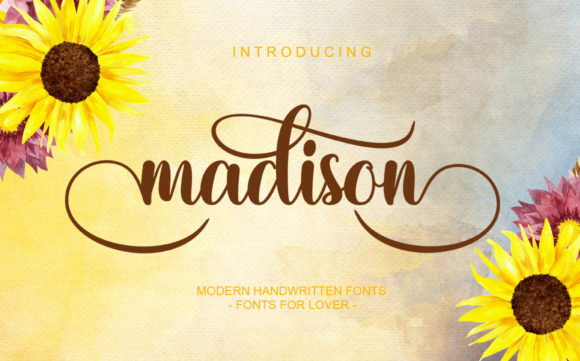
In a digital landscape increasingly dominated by sterile templates and AI-generated uniformity, the search for genuine visual identity has become more urgent than ever. Designers, marketers, and entrepreneurs are rediscovering a powerful truth: the smallest details often carry the most emotional weight. Among those details, typography stands apart as a quiet but decisive force in shaping perception. Madison, a flowing handwritten font characterized by an elegant touch and timeless appeal, is emerging as a compelling answer to the growing demand for authenticity in visual communication.
Madison is not simply another script typeface. It is a carefully crafted design tool that bridges the gap between the warmth of human handwriting and the precision required by contemporary digital workflows. Its distinct, fluid character set brings a sense of immediacy and personal care to projects ranging from luxury branding to social media storytelling. As professionals across industries rethink how they connect with audiences, understanding what makes a font like Madison significant requires looking beyond its aesthetic qualities and into the broader shifts reshaping creative work today.
The Human Element in an Automated World
The past decade has witnessed an explosion of content creation tools that promise speed and efficiency. Yet something essential often gets lost in the process: texture. Consumers have grown adept at filtering out visual noise, but they remain remarkably sensitive to cues that signal real human involvement. Handwritten fonts occupy a unique position in this dynamic. They evoke the intimacy of a personal note, the craftsmanship of bespoke design, and the credibility that comes from feeling like a real person—not an algorithm—is behind the message.
Madison taps directly into this psychological dimension. Its flowing letterforms and graceful connections suggest time, effort, and intentionality. In an era when trust is both scarce and precious, these subtle signals matter. Brands that incorporate handwritten typography into their visual language often report stronger emotional engagement from their audiences. This is not a nostalgic retreat from technology but rather a sophisticated use of design to amplify human presence within digital experiences.
What Sets Madison Apart in the Script Font Landscape
To understand the growing attention around Madison, it helps to clarify what the font actually is. Madison is a flowing handwritten font that delivers an elegant touch while remaining highly legible—a balance many script typefaces struggle to achieve. Its distinctive letterforms carry a timeless quality that suits both contemporary and classic applications. Designers describe it as remarkably versatile, able to adapt to everything from wedding invitations and luxury product packaging to website hero text and Instagram quote graphics.
A critical technical feature that elevates Madison above many alternatives is its PUA encoding. PUA, or Private Use Area, refers to a range of Unicode characters that font designers can customize with alternate glyphs, swashes, and decorative elements. Because Madison is PUA encoded, users can access its full library of stylistic alternatives without needing professional design software. This democratization of advanced typographic features is significant. A small business owner creating her own logo in Canva, a freelancer designing a client's brand assets in Adobe Illustrator, or a content creator crafting thumbnails in a basic editing app—all can unlock Madison's extended character set with ease.
The Broader Shift Toward Accessible Design Tools
Madison's PUA encoding is not merely a technical footnote; it reflects a larger industry movement toward empowering non-specialists. The line between professional designer and creative entrepreneur has blurred considerably. Platforms like Canva, Figma, and Adobe Express have placed powerful design capabilities into the hands of millions who lack formal training. Fonts that are plug-and-play, without requiring advanced software to access their richest features, align perfectly with this trajectory.
Madison exemplifies how type design can evolve to meet changing user expectations. Today's creators want beautiful results without unnecessary friction. They value fonts that are not only visually impressive but also practical to use across multiple tools and platforms. The ability to easily incorporate swashes and alternate glyphs means a single typeface can produce dramatically different visual expressions, giving users creative range without the overhead of managing multiple font files or mastering complex OpenType panels.
Practical Applications Across Industries and Mediums
Observing how professionals actually deploy Madison in their work reveals its remarkable adaptability. In the hands of a brand strategist, the font becomes the cornerstone of a visual identity that communicates approachability and refinement. A skincare brand, for instance, might use Madison for its product names and taglines, creating an immediate association with care and authenticity. The font's elegant flow softens the visual experience, inviting consumers to linger and engage.
For freelance graphic designers, Madison offers a reliable go-to when clients request something that feels personal yet polished. It works beautifully on stationery suites, business cards, and presentation decks where making a memorable impression matters. The font's swashes can be deployed selectively to add flourish to initial capitals or signature lines, introducing bespoke character without overwhelming the overall composition.
Social media marketers and content creators find Madison especially valuable in an attention economy where scroll-stopping visuals are the currency of growth. A quote card rendered in Madison carries a different emotional charge than the same words set in a generic sans-serif. The handwritten quality suggests a real person's voice, increasing the likelihood of shares, saves, and meaningful engagement. As platforms continue to reward content that fosters genuine interaction, typography choices become a subtle but measurable competitive advantage.
In the publishing and events industry, Madison's timeless style resonates deeply. Wedding planners, book cover designers, and editorial art directors all seek fonts that can convey elegance without feeling dated. Madison's distinct letterforms deliver a sense of occasion that feels current rather than borrowed from a bygone era.
Why Handwritten Fonts Are Thriving in a High-Tech Environment
At first glance, the popularity of handwritten fonts in an age of artificial intelligence and machine-generated content might seem paradoxical. But this trend reflects a deeper cultural current. As digital experiences become more automated, humans crave evidence of human authorship. This craving manifests across multiple domains: the resurgence of vinyl records, the popularity of hand-drawn illustrations in tech branding, the appeal of imperfect photography on social media.
Madison inhabits this cultural moment perfectly. Its flowing strokes and natural variations echo the cadence of actual handwriting, even as digital precision ensures consistency and scalability. The font does not pretend to be calligraphy—it offers something more practical and accessible while still carrying the emotional payload of the handwritten word. This authenticity premium is likely to intensify as AI-generated imagery and text become more ubiquitous. Designers and brands that understand typography as a strategic asset rather than a decorative afterthought will increasingly seek fonts that convey unmistakably human qualities.
Enhancing Brand Narratives Through Intentional Type Selection
Every font choice tells a story, whether the audience consciously registers it or not. A bold geometric sans-serif communicates stability and modernity. A delicate serif whispers tradition and authority. A flowing handwritten font like Madison signals personal connection, care, and creative spirit. Forward-thinking entrepreneurs and marketers are paying closer attention to these semiotics because they understand that brand perception is built through accumulated impressions.
Consider a direct-to-consumer coffee brand launching a new line of ethically sourced beans. The product photography might be warm and inviting, but the typography on the packaging ultimately frames the consumer's entire experience. Choosing Madison for the product name and origin notes transforms the package from a simple container into an object that feels hand-crafted. It reinforces the brand's narrative of attention to detail and personal sourcing relationships. Consumers pick up on these signals, even if they cannot articulate why the packaging feels different from mass-market alternatives.
Workflow Advantages for Fast-Moving Creative Teams
Practicality often determines whether a beautiful font becomes a daily workhorse or a forgotten asset buried in a font library. Madison earns its place in busy workflows through its ease of use and the time-saving advantages of its PUA encoding. Designers can experiment with alternate characters and swashes rapidly, iterating through options without opening character map utilities or hunting through glyph panels. This speed matters in environments where deadlines are tight and multiple versions of a design must be produced for different formats and platforms.
For marketing teams managing multiple brand touchpoints, consistency without monotony is a perennial challenge. Madison's extended character set allows teams to maintain typographic coherence while introducing subtle variety. A newsletter subject line, a landing page headline, and a product tag can all feature Madison but feel uniquely tailored to their context through the selective use of different glyphs and swashes. This flexibility reduces the temptation to introduce additional, potentially brand-diluting fonts into the mix.
The Enduring Appeal of Timeless Elegance
Trends in typography cycle rapidly, but certain qualities remain perennially valued. Elegance, when executed with restraint and precision, does not go out of style. Madison's timeless appeal stems from its balanced proportions and the natural flow of its letter connections. It avoids the trap of excessive ornamentation that can date a typeface quickly. Instead, it relies on graceful fundamentals that feel at home across decades and design movements.
This longevity makes Madison a smart investment for professionals building long-term brands. A logo or wordmark rendered in the font is less likely to feel stale in five years than one built around a hyper-trendy display typeface. As more businesses adopt agile branding approaches—where visual identity is refined rather than overhauled—fonts that can evolve gracefully alongside a brand become strategic assets.
Typography as a Reflection of Changing Consumer Expectations
Consumer expectations around brand presentation have shifted dramatically. The bar for visual polish is higher than ever, driven by ubiquitous exposure to excellent design through social media and digital platforms. Yet alongside that expectation of quality runs a parallel desire for relatability and approachability. Polished but cold no longer wins; polished and warm does. Madison's handwritten character bridges this gap effectively. It delivers professional-grade design while radiating warmth.
In service-based industries particularly—coaching, consulting, wellness, creative services—the font choice can directly influence a potential client's willingness to reach out. A website that feels corporate and impersonal may deter the very human connection a service provider aims to foster. Madison can shift that perception in a matter of pixels, signaling that behind the brand stands a real person ready to build a relationship.
Looking Ahead: The Integration of Handcrafted and Digital
The trajectory of design suggests not a return to purely analog methods but an increasingly sophisticated synthesis of handcrafted aesthetics and digital capabilities. Fonts like Madison represent this synthesis in action. They are born from the observation of handwriting but optimized for pixel-perfect rendering across screens, prints, and environments their original inspiration never encountered.
As variable font technology matures and design platforms become more intelligent, the possibilities for handwritten fonts will expand further. Imagine responsive typography that subtly adjusts its character based on the viewer's device or context. While Madison today offers a rich but bounded set of alternates through its PUA encoding, the foundational appreciation for humanistic letterforms will only grow as technology evolves. Designers who invest now in understanding how to deploy handwritten fonts effectively will be better positioned for what comes next.
The focus on accessibility, too, points toward a future where sophisticated typography is not gatekept by software licensing or technical expertise. Madison's PUA encoding anticipates this democratized landscape. As more creators enter the design space from non-traditional backgrounds, fonts that work intuitively across ecosystems will become the standard rather than the exception.
Integrating Madison Into a Cohesive Design Strategy
Using a distinctive font like Madison well requires thoughtful integration into a broader design strategy. The most successful applications pair its flowing elegance with clean, understated supporting elements. A restrained sans-serif for body text allows Madison's headlines and accent text to shine without competition. Ample white space gives the font room to breathe, accentuating the graceful movement of its strokes. Color palettes that lean toward warm neutrals, soft pastels, or rich jewel tones often complement the font's character naturally.
Small details amplify impact. Designers report that Madison's swashes work especially well on initial capital letters, creating an immediate focal point that draws the eye into the text. The font also excels in short-form applications where its personality can be absorbed quickly—think packaging labels, social media titles, and brand marks. When used thoughtfully, even a single word set in Madison can transform an ordinary layout into something memorable.
Conclusion: Madison as Part of a Larger Typographic Consciousness
Madison is more than a flowing handwritten font with an elegant touch. It is a response to a cultural moment that values authenticity, a practical tool engineered for modern workflows, and a signal of where typography is heading. Its PUA encoding opens doors for a wide range of users, while its timeless aesthetic ensures relevance well beyond current trends. For the professionals, creators, entrepreneurs, and marketers who choose to work with it, Madison offers a direct line to the emotional power of the handwritten word—a currency that continues to appreciate in a digital world hungry for genuine human connection.
Typography, at its best, disappears into the experience of the message. When a font does its job well, the audience feels something before they analyze anything. Madison operates in that space, delivering elegance without pretension, personality without chaos, and sophistication without barriers. As creative disciplines continue to evolve and blend, fonts that bridge technical accessibility with emotional resonance will define the visual landscape of the years ahead.